
This summer, many of the ongoing concerns that have surrounded WeWork came to a head as the coworking giant began planning its IPO. By the end of September, the company withdrew its IPO, and Adam Neumann was ousted as CEO along with several other key executives. In late October, WeWork reached an agreement to be taken over by SoftBank Group, its primary investor, in a deal that will value the embattled office-space company at approximately $8 billion (down from $47B). As a result, the future of WeWork remains uncertain. However, what is certain is that if WeWork ultimately fails, landlords will be in trouble.
WeWork's Formula
WeWork's locations occupy the less desirable, lower floors of office buildings. This strategy seemed to be a win-win for both WeWork and landlords alike—and today the company is the largest private tenant in New York City. As a result, these landlords took the opportunity to refinance their mortgages based on now-higher occupancy rates.
The Fallout from Failure
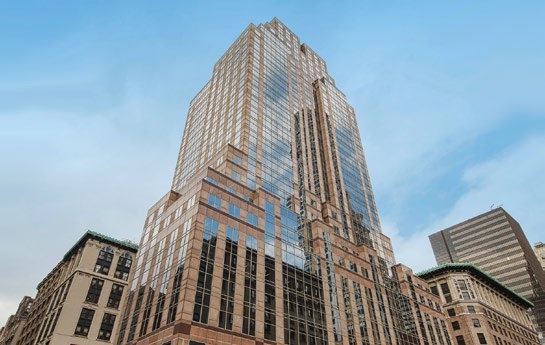
If WeWork fails outright, then landlords will find themselves with multiple 'undesirable' lower level floors of vacant space. Since WeWork leases 130 locations totaling 9.1 million square feet in New York City, landlords will suddenly be competing for tenants like never before.
What's worse is that the 'revolutionary' buildouts installed by WeWork will be undesirable to new tenants, meaning landlords will have to demolish these spaces and start over. With buildouts in New York City costing over $100 per square foot, this could make leasing these spaces too expensive and unfeasible for ownership. The harsh reality is that finding new tenants to absorb these spaces will be extremely difficult—and even worse for landlords that are not in a position to do expensive buildouts.
The result? Owners will suddenly find themselves unable to pay the crushing debt service. Eventually, some landlords will face defaulting on their loans, unable to pay off the debt and be forced to sell.
The WeWork Workout: Convert to Office Condos
Luckily, there is a solution that would allow a landlord the opportunity to stay in the black—convert the vacant space into office condominiums.
Rather than losing their buildings to foreclosure or selling at a significant loss to an investor, converting to office condominiums will allow landlords to sell the vacant former WeWork space to owner-occupiers. By taking this approach, landlords will be able to pay down their loans and retain ownership of the income-producing, occupied portion of the building.
The demand from buyers who wish to own and occupy their office space far outweighs the supply of available office condominiums. If WeWork fails, there will be an abundance of office space dumped on the leasing market, yet office condominiums will remain a very small, supply constrained, and highly sought-after asset class.
The Office Condominium Conversion Precedent
There is precedent for converting unleased space into office condominiums. In 1989, Hammerson Properties had just completed the construction of 420 Fifth Avenue, a 650,000 square foot, class A spec office building. Unfortunately, the leasing market had completely collapsed just as the building went to market. With only 10 percent of the building leased and no outright buyers in sight, the developers decided to offer full floors for purchase as condominiums, ultimately attracting buyers like the Girl Scouts of America, Mediterranean Shipping Company and the Rockefeller Foundation, among others. The move allowed the developers to meet their obligations to the banks and to sell out the project for a profit.
Around the same time, 633 Third Avenue, a 1 million square foot, class A building saw its occupancy drop to 30 percent in the softening market. The building was converted to office condominiums, and the vacant space was sold to owner-occupiers, such as Memorial Sloan Kettering, Mount Sinai Hospital and the United Nations Development Corporation.
In both cases, the developers used office condominium conversions to avoid losing their properties and to turn a profit. Many of WeWork's landlords can use the same office condominium conversion strategy to combat the challenges that lay ahead.
Who Are the Buyers?
In the past 12 months there have been 38 office condominium sales totaling 331,000 square feet.
• 55% of the buyers were traditional owner/occupier business, including a book publisher, a music production studio and a European-based shipping company.
• 34% of the buyers were non-profits or foreign governments, including a Mission to the United Nations, a foundation that supports the arts and a fencing organization.
• 10% of the buyers were medical practitioners, including an orthopedist, a dentist, and a gastroenterologist.