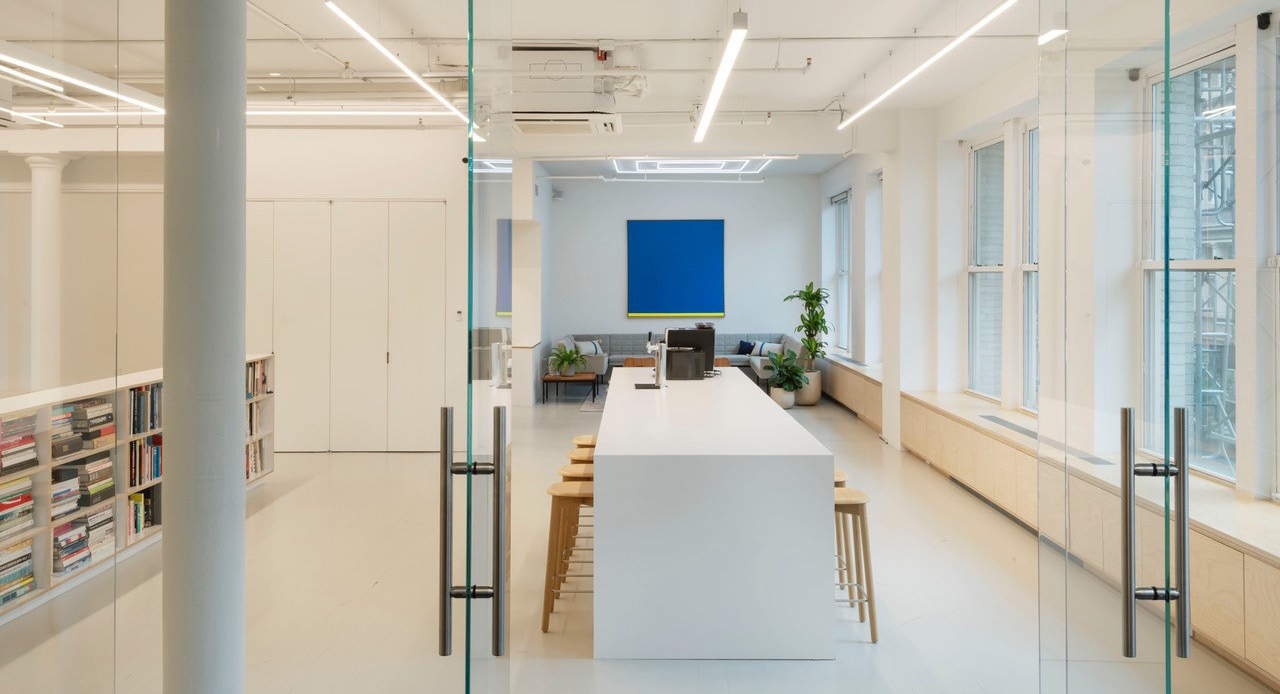
CASE Agency, a branding and digital agency, purchased the entire 4th floor of 141 Wooster Street in February 2020. 141 Wooster Street is an 8-story, 54,000 RSF office cooperative located in the SoHo submarket between Prince and West Houston Streets. The following are excerpts from an interview with Travis Stratford, co-founding Partner of CASE Agency.
Tell us about your firm:
CASE focuses on creating, recharging, and activating beauty and health & wellness brands. Clients include The Estée Lauder Companies, Shiseido, and Elf Cosmetics.
CASE was founded in 2004 by my two partners, Tony Yumul, Enoch Palmer, and me. We named the agency after the Case Study House Movement, a Southern California initiative that combined new technologies with premium architecture. Eighteen years after renting our first studio space in Soho, we continue to partner with some of the world's most iconic brands.
What led you to purchase at 141 Wooster Street?
In mid-2018, my two partners and I began searching downtown Manhattan for the perfect commercial space. We scoured the online listings and toured many spaces in Tribeca, East Village, Soho, and Chelsea. In early 2019, we came close to purchasing a space in Tribeca only to be outbid by an all-cash buyer. The other spaces we toured were either out of our price range or didn't match our company's culture. As soon as we finished touring 141 Wooster in mid-2019, we knew it was the one. The 8,315 RSF was big enough for our existing team and in-house photo studio and it offered us room to grow. Also, the location in the heart of Soho's cast-iron historic district was perfect, and the building is the birthplace of Dia Art Foundation and home of Dia's hidden gem, The New York Earth Room. We knew it'd be a good fit.
Tell us about your process to purchase the space:
After negotiating on a purchase price, our next step was to secure the financing and receive co-op board approval. Ahead of closing, we partnered with TBD Architecture + Design Studio and Structure NYC to quickly develop our architectural plans and construction budget. With the historic building being mixed-use, the co-op board raised concerns about how our CASE team members and clients may add traffic to the building's existing primary elevator. To alleviate that pressure, the co-op board proposed (and the seller approved) the seller contributing a portion of the purchase price towards upgrading the building's dated freight elevator to serve as the primary commercial entrance for the 4th floor.
We closed and began our buildout in February 2020—a few weeks before the pandemic began.
Can you tell us about your overall ownership experience and future outlook?
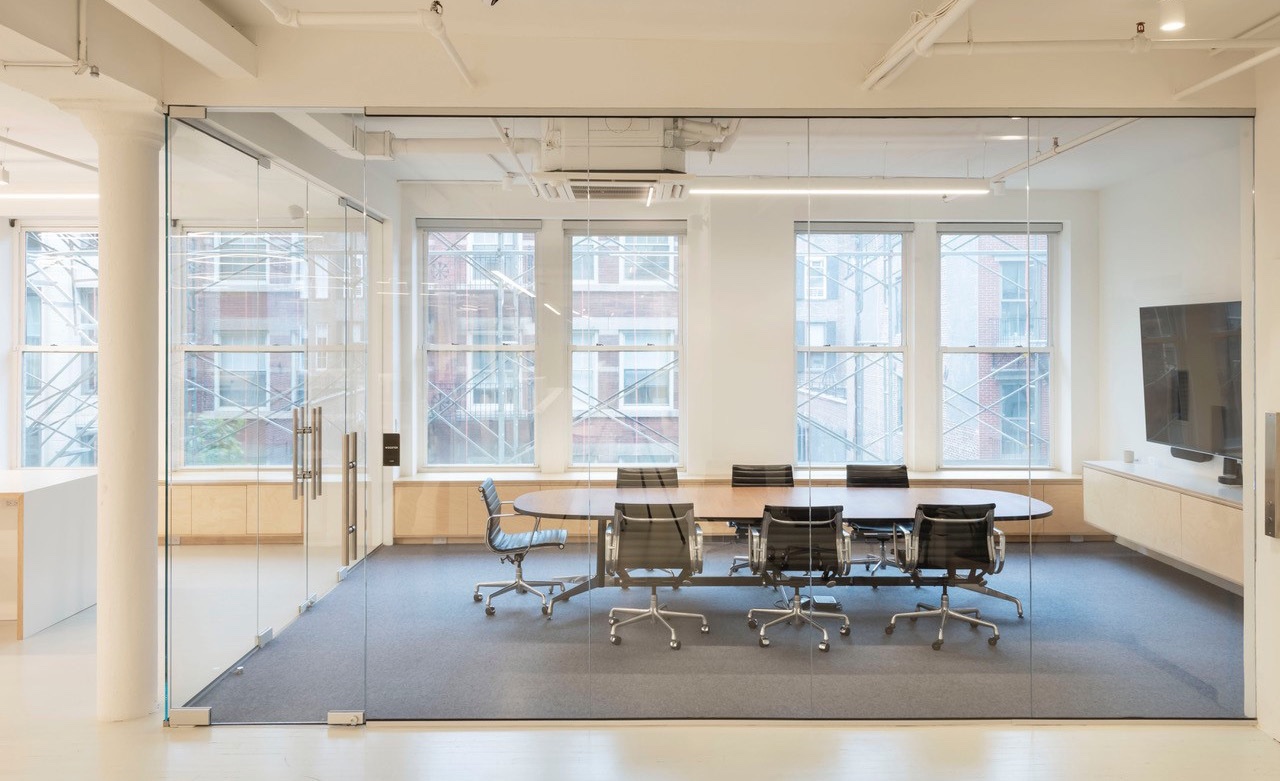
We fell in love with 141 Wooster Street because of the cast-iron columns, high ceilings, the full floor, natural light from both sides of the building, and the creative DNA of the building and neighborhood. We were, however, anxious about the price tag and complexities (known and unknown) of an NYC gut-renovation buildout.
We wanted to build equity in an appreciating asset versus continuing to pay rent to the man. We also wanted to invest in our own space that represented the design ethos of our company, along with a space that offered room to grow.
The major challenge we faced was that the pandemic caused our buildout to take twice as long as we had anticipated, but with our team working remotely at the time, it did not impact our operations.
Lastly, we financed the purchase using a mix of an SBA 504 loan and a commercial loan from the Chase Small Business team. Given historic-low rates triggered by the pandemic, we almost borrowed the money for free.
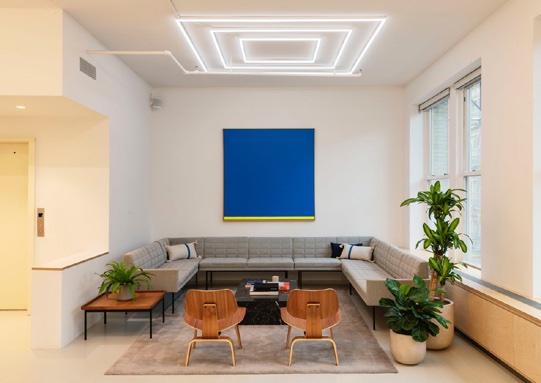
Our purchase and buildout were (mostly) seamless because we had an amazing extended team: commercial real estate team, Baker New York; legal team, Daniels O'Connell PC; architect, Josh Weiselberg at TBD; contractor, Structure NYC; financing team, Chase Small Business; office furniture & design, Herman Miller; lighting design, Delta Light; and our supportive co-op board at 141 Wooster Street. It was crucial to work with experts in each designated field collectively to get the job done.
As far as the future of the office market, to successfully build team culture and produce the best possible client work, creative teams and companies like us will need to regularly supplement remote working with in-person, collaborative, and inspiring work sessions (together with full-time team members, extended contractors, and clients). That is why we invested in purchasing our office space.
How the Rise of Interest Rates Has Impacted Owner Occupiers
Rudder Property Group sat down with Andrew Dansker, CEO of Dansker Capital Group, to get a handle what's happening in the rapidly-changing lending space for owner/occupiers.
What are lenders' appetites for owner/occupier loans?
Lender appetite for owner-occupier loans remains strong, as lender reticence about lending to "in-person" business has largely receded. It is now a matter of being "rate-sensitive." Overall, there has also been a general understanding of the need to skip 2020 when underwriting a business's financial history. As long as the recent past has been strong and the balance sheet is strong, weak results from 2020 are generally not being counted against a business even though they still fall within the traditional two-to-three-year lookback window.
How have loans changed in the past six months? How have they impacted purchasers?
Rates are higher than they have been at any point in the past 10 years. Rising interest rates impact borrowers in many ways but primarily in borrowing and purchasing power. Loans are usually constrained by their debt service coverage ratios (debt service cost/available net cash flow) in New York where capitalization rates are low. When the debt service cost rises, the net impact is a reduction in borrowing power and purchasing power. Even sufficient cash flow does not necessarily complete the financial analysis for a company considering space—because the borrowed money is more expensive, which means that as a company evaluates profitability, it may choose a smaller space.
How should investors think about the market differently than users of office condominium space?
There are two types of investors: people considering turning a traditional rental building into office condominiums and people buying office condominiums. Both investors focus on "bite-sized" condo units due to purchasing power constraints. Thus, demand for smaller units will likely rise faster than for larger units. Those converting buildings will need to consider layout efficiency, and with the blows to office rentals (pandemic, work-from-home, and recession-related layoffs), building owners should calculate individual unit sell-out values versus traditional renting from a valuation perspective.
What are your predictions for the future of owner/occupier loans?
Lenders like strong businesses as owner-occupiers. A loan secured by both the real estate and ongoing business appeals to their belt-and-suspenders dispositions. The appetite for these loans should remain robust going forward.