Today, the stock market, crypto, NFTs and other Wall Street style investment vehicles are all the rage. What most investors and business owners do not realize is that owning and occupying your office space can produce much higher rates of return and be a far safer and more predictable investment vehicle.
While the office condominium market remains small—making up only 2% of New York City's 500 million square foot office market—those who have invested in office condominiums are benefiting from returns that often outperform Wall Street and private equity firms.
Take firms like Blackstone or The Carlyle Group who, like most private equity firms, strive to double their equity in a seven to 10-year timeframe. Most office condominiums have far higher returns, and often in shorter periods of time.
Let's assess a real-life example. CreoDent, a dental laboratory, purchased a 10,000 square foot office condominium at 545 West 45th Street in January 2021. CreoDent paid $6 million for the office condominium, or $600 per square foot. Additionally, they paid another $500,000 in closing and construction costs, making their total cost for the office condominium $6.5 million.
Taking advantage of a Small Business Administration (SBA) loan, which allows small business owners to obtain up to 90% financing, CreoDent secured a $5.5 million dollar loan from the SBA and City National Bank. CreoDent only had to invest $1 million cash (equity) for the property.
With CreoDent investing $1 million, the value of their office condominium only needs to increase to $7.5 million in the next 10 years to double their equity and achieve a desirable Wall Street rate of return. This number is based off their total initial investment, $6.5 million, plus an additional $1 million in capital appreciation. When their office condominium is valued at $7.5 million, CreoDent has doubled their equity.
This should be no problem, as doubling equity is rather easy with office condominiums. CreoDent's office condominium needs to appreciate less than 2% each year for the next 10 years. Given the average value of New York City office condominiums was $757 per rentable square foot in 2020, it seems very reasonable that the property will sell for more than $7.5 million in 10 years based on inflation alone.
If CreoDent's office condominium appreciates by 4% per year over a 10-year period—also a very reasonable expectation—they will triple their equity. And if they achieve a 5% annual appreciation, CreoDent will more than quadruple their equity within a 10-year period. These scenarios are all easily achievable, and by Wall Street's measurements, they'd be considered economical grand slams.
Not only do office condominiums often outperform Wall Street, but they also insulate owner/occupiers from the volatility of landlords, endless rent escalations and onerous restrictions.
In turbulent times, the stock market and typical Wall Street style investments can be volatile. When looking for safe investments, office condominiums are the perfect solution. Instead of renting your office space, why not purchase an office condominium? You'll likely exceed the returns of Wall Street-like investments without the stress and unpredictability of most other investment vehicles.
Q&A: Miami's Office Condominium Market is Bringing the Heat
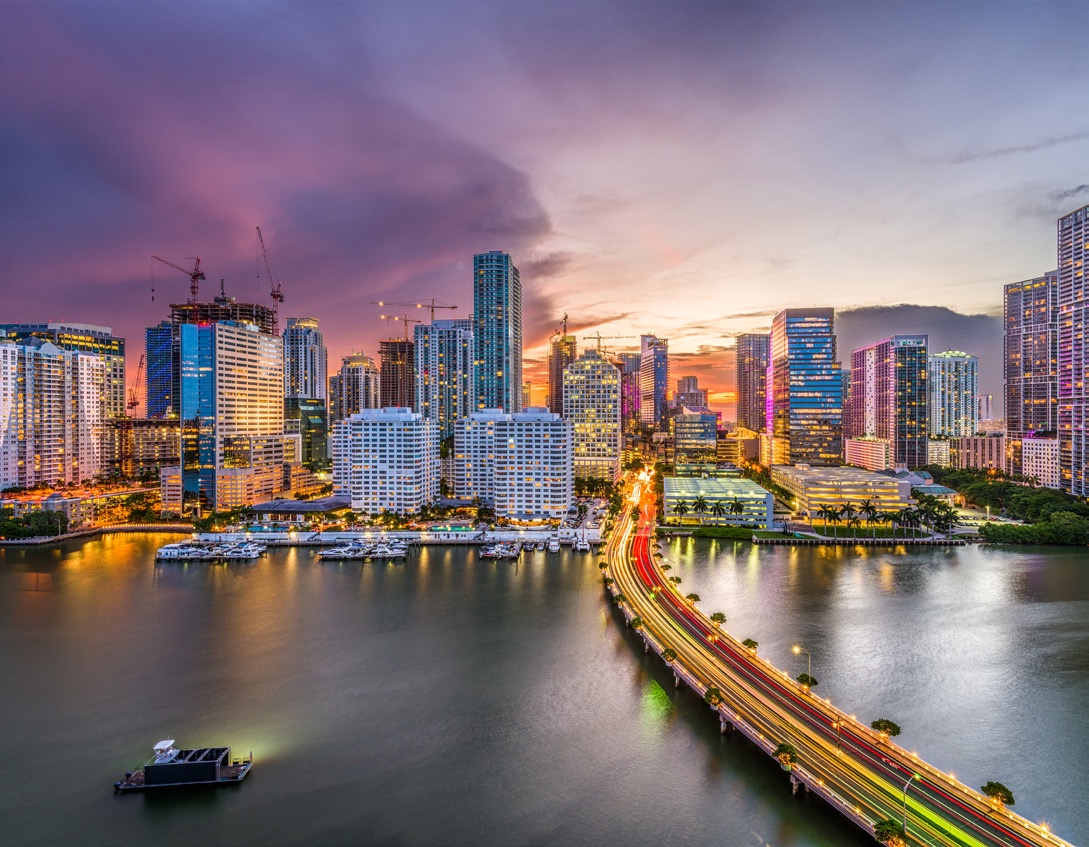
Rudder Property Group sat down (virtually, of course) with Miami-based Fortune International Realty's Fabio Faerman and Eduardo Citcioglu to get a pulse on the office condominium market in the Miami area. Fortune International Realty is the exclusive sales agent for some of South Florida's most prominent office condominium projects.
How large is the Miami office condominium market?
The Miami office market, overall, is 45.6 million square feet. Office condominiums make up about 3.5%, or 1.6 million square feet, of the market.
In what submarkets are most Miami office condominiums located?
Most office condominiums are in four major submarkets: Brickell, Aventura, Coral Gables and Downtown Miami.
Brickell has 6.5 million square feet of office space, with 420,000 square feet being office condominiums. A notable office condominium building in the submarket is Infinity at Brickell, constructed in 2008.
Aventura has 2.5 million square feet of office space, with 200,000 square feet being office condominiums. The most notable office condominium building in the submarket is the 12-story Beacon Tower of Aventura built in 2016.
Throughout the pandemic Silicon Valley techies and Wall Street titans alike have relocated to Miami and opened offices.
Coral Gables has 6.2 million square feet of office space, with 775,000 square feet being office condominiums. The most notable office condominium building is Ofizzina, a luxury 100,000 square foot, 54-unit office condominium building completed in 2019.
Downtown Miami has 13.8 million square feet of office space, with 200,000 square feet being office condominiums. Natiivo, a new office condominium building coming in 2022, will total 130,000 square feet.
What are some recent office condominium projects?
In 2014, One Flagler, a 15-story, 143,000-square-foot building in downtown Miami, was converted to office condominiums by Newgard Development Group. Built in 1952, developers invested $10 million to fully renovate the building and common areas. The building earned a LEED Silver Certification, which is uncommon for historic buildings. Full-floor, 6,300 square foot office condominiums sold at an average $360 per square foot. About 87% of buyers were foreign, with most being Argentinian and Venezuelan investors, and 13% were domestic.
Another conversion is the Chase Bank Building, a 14-story, 138,000 square foot building in downtown Miami. The building underwent about $7 million in renovations. The building's full-floor office condos, about 10,000 square feet each, sold for an average $270 per square foot. Most purchasers were foreign, primarily driven by European and Latin American investors.
What do you expect to see in the Miami office condominium market moving forward?
The pandemic accelerated the Miami office condominium market, as hedge funds, financial firms, and tech companies moved in. Both Miami-based and transplant companies alike are realizing the many benefits of choosing to buy office space rather than rent. With the Mayor making concerted efforts to lure companies to Miami, locals expect office condominium purchasing and construction activity to boom—and prices to increase—as companies continue to ride the Miami wave. More and more people are moving to Miami and firms continue to make long-term commitments. As a result, prices are expected to rise.